




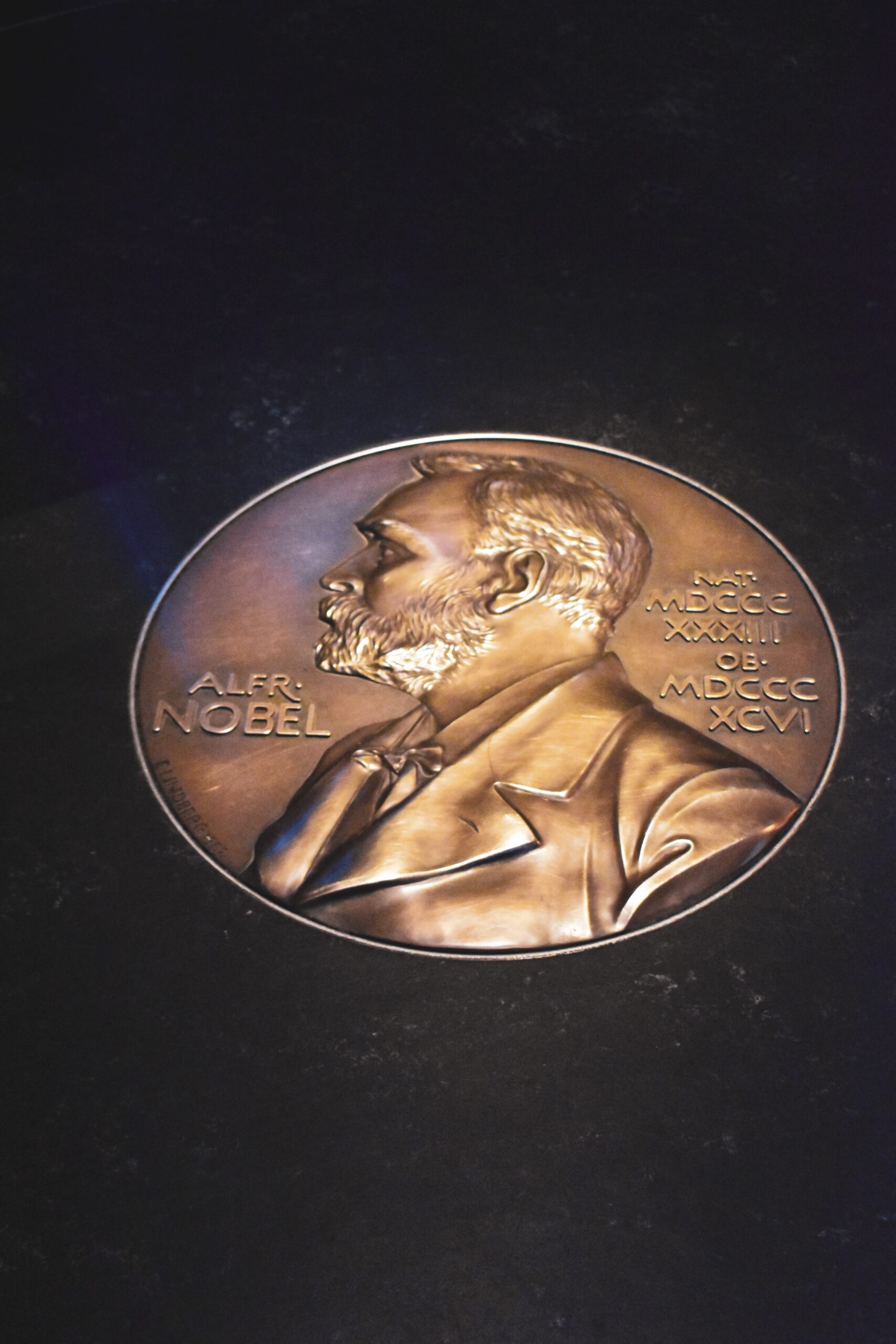
In three decades as a journalist, I’ve had the privilege of interviewing several Nobel Prize winners, including Desmond Tutu and Malala Yousafzai. Few people have done more than those two, in my lifetime, to challenge prejudice and discrimination.
But something really struck me on a visit to the Nobel Prize Museum in Stockholm, as I looked at photographs of laureates dating back to 1901: the vast majority, even until very recently, have been white and male.
This lack of diversity is most pronounced in the prize which, for professional reasons, interests me most — the Nobel Prize in Economic Sciences, or, to use the correct title, the Sveriges Riksbank Prize in Economic Sciences in Memory of Alfred Nobel.
There have been 53 winners of the award in total. The most recent three — Ben Bernanke, Douglas Diamond and Philip Dybvig — were announced last week.
50 out of 53 are white men
How many of those 53 winners have been women? Two. How many of them have been black? Just one, Sir Arthur Lewis, and he was awarded it as long ago as 1979.
To mark Black History Month, I thought I would highlight a few facts about Sir Arthur’s remarkable life, and the challenges he overcame to become one of the most highly respected economists and financial thinkers of the modern era.
- He was born into a family of modest means on the island of St Lucia, the fourth of five children.
- He was a sickly child and, from the death of his father at age seven, was brought up by his mother.
- He took a job at his clerk, aged 14, but continued his studies and won a scholarship to the London School of Economics.
- He became the first black person to be appointed as lecturer at the LSE, reportedly telling his colleagues: “I’m the kind of person you guys like the least; I'm an educated native”.
- He later became the first black instructor to gain a full professorship at Princeton University.
- He served as an adviser to several governments, was the founding president of the Caribbean Development Bank, and was knighted by Queen Elizabeth II in 1963.
- Sir Arthur’s main academic interests were in economic development and in tackling poverty and unemployment.
- But he was a man of action too and, while working as a Professor at the University of Manchester, he helped to set up education and training centres for West Indian migrants in poorer parts of the city.
- He was also much loved by those who worked with him. Professor Burton Malkiel, a fellow economist at Princeton, described him as the “perfect colleague” and the “perfect counter‐individual to the maxim that nice guys finish last”.
- He died in 1991 and was buried in the grounds of the St Lucian community college named in his honour.
Extraordinary life
What a remarkable man Sir Arthur Lewis was. What an extraordinary life he led. And what a huge contribution he made, despite huge personal disadvantages, to his fellow human beings.
But, three decades after his death, why are there still so few black professors today? Why so few black people in senior positions in the financial industry? And why, even now, has there been only one black Nobel laureate in Economic Sciences?
We owe it to pioneers like Sir Arthur to keep demanding answers.
ARTICLES YOU MAY HAVE MISSED
You may also be interested in reading these recent articles:
Are passive funds bad for markets?
2022 has been exceptionally tough for investors
Recession means it’s time to review your savings
Picture: Anastacia Dvi via Unsplash© rockwealth MMXXII