

Most of the time, investing is relatively straightforward. You put money in, you leave it alone, and you tend not to think about the risks. Then come market falls like they have this week, and the risks become very real, very fast.
For most investors, the day-to-day experience is quietly uneventful. Statements arrive. Direct debits go out. The numbers drift upward, then back, then up again. It's not particularly exciting.
Then suddenly the background hum of markets becomes a sharp, unsettling noise, and the risk feels very real.
This week, US and Israeli strikes on Iran, and the Iranian response, sent shockwaves through global markets. As I write this, the Stoxx Europe 600 has fallen 3.2% today, on top of sharp losses yesterday, and the S&P 500 is currently down 1.8%. Earlier, the Nikkei 225 index closed down 3.1%
Before we go any further, the obvious thing needs saying. This isn't primarily a financial story. The conflict has already cost hundreds of lives. That matters far more than any portfolio movement.
But investors still have decisions to make. I topped up my ISA yesterday, investing a lump sum into low-cost, passively managed ETFs. The timing, on the face of it, looks poor, but I'm not losing sleep over it. In this piece I want to explain why.
The pull of the exit
Watching your investments fall isn't a neutral experience. It doesn't feel like an abstract number changing on a screen. It feels like losing money that is yours, money you worked for, saved carefully, and entrusted to markets that are now handing it back in smaller quantities.
That discomfort has a name. The psychologist Daniel Kahneman spent decades studying how people respond to losses versus gains. His central finding: losses hurt far more than equivalent gains please us. We're not wired for equanimity when the numbers go red. The urge to act, to stop the bleeding, to get out while something remains, isn't weakness. It's human.
I've seen this in conversations with investors at every level of experience. The anxiety isn't confined to beginners. Sharp market falls have a way of making even the most level-headed investor question everything they thought they believed.
Today, a widening conflict, surging energy prices, and grim headlines make selling feel not just tempting but rational.
It isn't. The evidence makes that clear.
Why most investors get this wrong during market falls
The urge to sell is understandable. Acting on it is almost always a mistake.
DALBAR's annual Quantitative Analysis of Investor Behaviour has tracked the gap between fund returns and actual investor returns for decades. The findings are consistent and sobering. Investors, as a group, earn meaningfully less than the funds they hold, because they move money in and out at the wrong moments. They sell after market falls. They buy after market gains. The pattern repeats regardless of what's driving the volatility.
UK research tells the same story. Morningstar's long-running Mind the Gap research consistently finds that investors earn meaningfully less than the funds they hold. The gap varies by market and period, but is persistent everywhere.
The 2022 rate-shock selloff is a useful example. Investors who sold when central banks began raising rates locked in losses just before markets stabilised. They then faced the harder question of when to get back in. Most got that wrong too.
None of this is said to make anyone feel foolish. These are genuinely difficult moments. But the instinct most investors follow during a crisis, selling to feel safer, has a consistent and measurable cost. We've written before about why missing just a handful of the market's best days can devastate long-term returns. The same logic applies now.
The real reason we panic
Part of the answer lies in our wiring. Kahneman and Tversky's research on loss aversion established something any investor who's watched a portfolio fall will recognise: losses feel roughly twice as painful as equivalent gains feel good. A £10,000 drop hurts far more than a £10,000 rise pleases. That's not a personality flaw. It's a feature of human cognition that makes staying calm during market falls genuinely hard work.
Our brains don't operate in isolation, either. They operate inside a media ecosystem structured, quite rationally from a commercial standpoint, to amplify fear. This week's coverage has included warnings from Wells Fargo strategists that the S&P 500 could drop to 6,000 if oil exceeds $100 a barrel. A cross-asset macro trader was quoted in the Boston Globe describing the situation as "an almost perfect selloff catalyst for an already fragile equity market." These views may prove correct. They may not. Either way, they're the kind of headlines that make selling feel like the grown-up response. Behavioural finance expert Joe Wiggins made this point well in a piece we published on why constant market noise makes good decisions harder.
There's also a structural point worth making plainly. Much of the financial services industry earns more when investors trade. Inactivity, however rational, generates no revenue. The incentives don't point toward telling clients to sit on their hands.
That's not an accusation. It's the environment investors operate in, and knowing it exists is the first step to not being governed by it.
The price of admission
Market falls are not a malfunction. They're the deal.
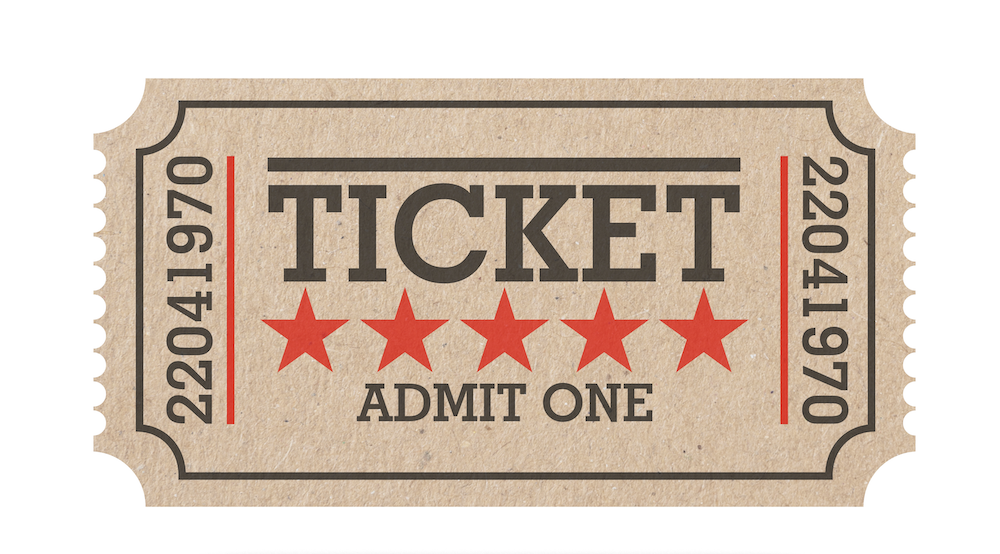
Think of equity investing like buying a ticket to a live show. It covers the whole experience: the brilliant performances, the slow stretches, the night the projector flickers, the moment someone sets off the fire alarm and half the audience bolts for the exit. You can't buy a ticket that admits you only to the good parts.
Volatility is the mechanism by which patient investors are rewarded. Jeremy Siegel's long-run research makes the case clearly: over extended periods, equities have outpaced bonds, cash, and inflation by a margin that's hard to replicate through any other accessible asset class. But that premium exists precisely because equities are uncomfortable to hold through downturns. The investors who earn the long-run return are the ones who stay in the building when the fire alarm sounds. There's a reason we say slow and steady wins the investment race.
The Covid crash of March 2020 is worth recalling. Markets fell with sickening speed. The headlines were apocalyptic. Plenty of investors sold. What followed was one of the sharpest recoveries in modern market history, and those who had sold faced the agonising decision of when to get back in, a decision most got wrong.
The current situation may deteriorate. It may not. Morgan Stanley's chief US equity strategist Mike Wilson said this week he sees the Iran conflict as unlikely to dent his bullish view on equities. He may be right. The point isn't that everything will be fine. The point is that a long-term investor's response to uncertainty shouldn't change depending on which way the headlines are running on any given Tuesday.
My ISA top-up, made into low-cost, passively managed ETFs, was an investment made in full knowledge of what the ticket covered. Markets fell the next day. That was always part of the price. Trying to time the market isn't a refinement of the strategy. It's the abandonment of it.
What to do when market falls hit
The honest answer to "what should I do right now?" is: probably less than you think.
Stop checking your portfolio every few hours. The frequency with which you look at falling numbers affects how frightened you feel and how likely you are to act. The portfolio hasn't changed because you looked again. Your anxiety has.
Don't sell. Paper losses are unrealised. The moment you sell, they become real, permanent, and unrecoverable through any subsequent recovery. Selling to reduce discomfort is one of the most expensive emotional decisions an investor can make.
If you have surplus cash outside the market, ask calmly whether now might be a reasonable moment to put some of it to work. Nobody rings a bell at the bottom. But markets are cheaper than they were last week.
And use a quiet moment, not this week, to have an honest conversation with your adviser about your true risk appetite. Not the theoretical version you described when filling in a questionnaire. Your actual tolerance for watching a portfolio fall. This matters especially if you're approaching or recently entered retirement, where sequence of returns risk means the timing of losses carries more weight than it does for younger investors. Vanguard's Adviser's Alpha research suggests behavioural coaching from a good adviser adds around 1.5% in annual returns. That guidance is most visible in weeks like this one.
Staying the course through market falls
As I mentioned earlier, I invested a lump sum in equities yesterday. But I'm certainly not going to dwell on it.
There was a time I'd have found this situation genuinely stressful. I'd have replayed my decision, questioned my timing, wondered whether I should have waited for calmer conditions. That anxiety was real. It was also entirely beside the point.
What changed wasn't the markets. It was my understanding of what I'd actually signed up for. Volatility isn't a surprise feature of investing. It's a core one. You don't get the long-run returns without tolerating the short-run discomfort. That's not a flaw in the system.
The conflict in the Middle East is serious. Its human consequences extend far beyond anything a portfolio statement can measure. But the case for patience and discipline is unchanged.
If this week has unsettled you and you'd like to talk through your strategy with someone who will give you a straight answer, please get in touch with the team at rockwealth. We're here to help.
Resources
Kahneman, D. & Tversky, A. (1979). Prospect theory: An analysis of decision under risk. Econometrica, 47(2), 263–291.
Siegel, J. J. (2014). Stocks for the long run (5th ed.). McGraw-Hill.
DALBAR Inc. Quantitative analysis of investor behaviour (annual). Boston: DALBAR.
Vanguard. Adviser's alpha. The Vanguard Group.