Why Cash May Not Be King: A Case for Long-Term Investment
Matthew Horrocks
Cash holdings have recently offered returns at their highest rates since 2008. While cash is a reliable vehicle for capital preservation, it is not immune to the eroding effects of inflation. To put it into perspective, £100 in 1992 is now only worth £48, highlighting how inflation diminishes its purchasing power.
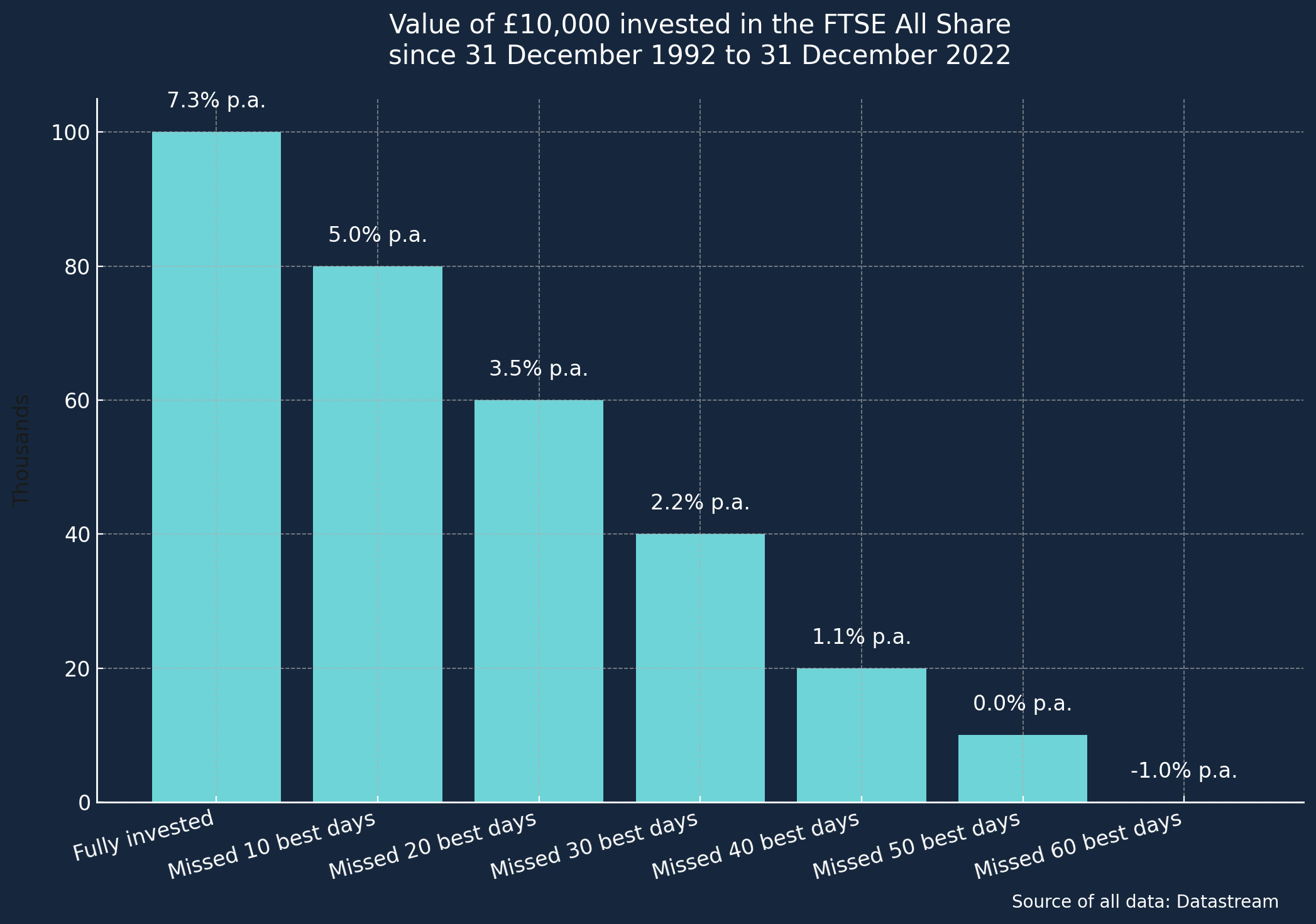
Investing in equities poses its own set of challenges, primarily centered around timing market entry. Some of the best days in the market often follow the worst days. Missing out on the 10 best days in the past 30 years would have reduced an investor's return by over 2% annually compared to staying invested throughout the period.
Over the long term, it is anticipated that risk will be rewarded, making equity markets likely to outperform both cash and inflation. However, the recent spike in UK interest rates, the highest since 2008, and ongoing market volatility have, for some, increased the perceived attractiveness of cash as an investment option.
Looking Back: Lessons from History
Allocating a larger portion of one's portfolio to cash carries its own set of challenges and risks. Inflation can significantly erode the value of cash holdings. When inflation is high, the same amount of money buys fewer goods and services in the future compared to today. For instance, £100 in 1992 is now worth only £48, given that the same basket of goods costs 108% more due to inflation. To safeguard the value of their cash, investors need interest rates on their deposits that at least match prevailing inflation levels.
History has shown us that financial markets tend to look ahead and that sentiment can shift rapidly. For example, the UK's FTSE All Share Index saw its largest daily return over 30 years shortly after three days of notable poor returns following the 2008 Great Financial Crisis. This illustrates the challenge of timing the redeployment of cash reserves, especially when those reserves are locked in Notice or Fixed-Term savings accounts.
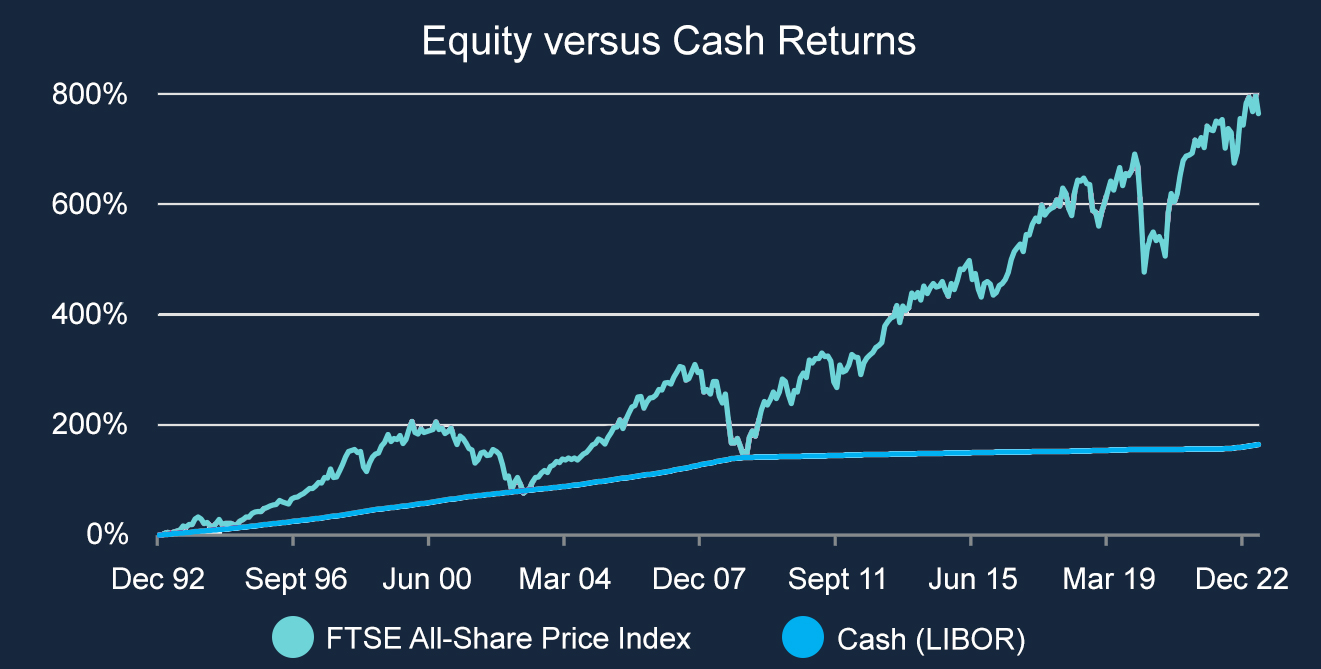
While it's acknowledged that holding higher levels of cash can mitigate investment risk, it also means being out of the market. As strategic long-term investors, we prioritise risk reduction through carefully constructed portfolios that emphasize diversification across asset classes, sectors, geographies, and styles. While past performance can't predict future returns, historical data suggests that staying invested during periods of market volatility is often rewarded, as evidenced by equities outperforming cash by almost 600%, or more than 4% annually, over the last 30 years.
Looking Forward: Opportunities Amid Uncertainty
Uncertainty continues to prevail as central banks navigate the delicate balance of withdrawing liquidity from the financial system while supporting an already fragile economy. Despite uncertainties surrounding the normalisation of inflation and interest rates, the outlook for risk assets appears promising for long-term investors. Recent market turmoil has led to many investments becoming more attractively valued. As long-term multi-asset investors we maintain a balanced approach, ensuring preparedness for a variety of market conditions.
Start with clarity, scale with confidence
rockwealth helps families across Gloucestershire build financial security - with evidence-based investing, fair fixed fees, and advice that puts your life first.






 While it's acknowledged that holding higher levels of cash can mitigate investment risk, it also means being out of the market. As strategic long-term investors, we prioritise risk reduction through carefully constructed portfolios that emphasize diversification across asset classes, sectors, geographies, and styles. While past performance can't predict future returns, historical data suggests that staying invested during periods of market volatility is often rewarded, as evidenced by equities outperforming cash by almost 600%, or more than 4% annually, over the last 30 years.
 Looking Forward: Opportunities Amid Uncertainty
Uncertainty continues to prevail as central banks navigate the delicate balance of withdrawing liquidity from the financial system while supporting an already fragile economy. Despite uncertainties surrounding the normalisation of inflation and interest rates, the outlook for risk assets appears promising for long-term investors. Recent market turmoil has led to many investments becoming more attractively valued. As long-term multi-asset investors we maintain a balanced approach, ensuring preparedness for a variety of market conditions.
Looking Forward: Opportunities Amid Uncertainty
Uncertainty continues to prevail as central banks navigate the delicate balance of withdrawing liquidity from the financial system while supporting an already fragile economy. Despite uncertainties surrounding the normalisation of inflation and interest rates, the outlook for risk assets appears promising for long-term investors. Recent market turmoil has led to many investments becoming more attractively valued. As long-term multi-asset investors we maintain a balanced approach, ensuring preparedness for a variety of market conditions.